T-04 · Research team
Immunogenetics & Transplantation Immunology Team
Understanding immune compatibility and post-transplant biology to improve transplantation outcomes.
Purpose
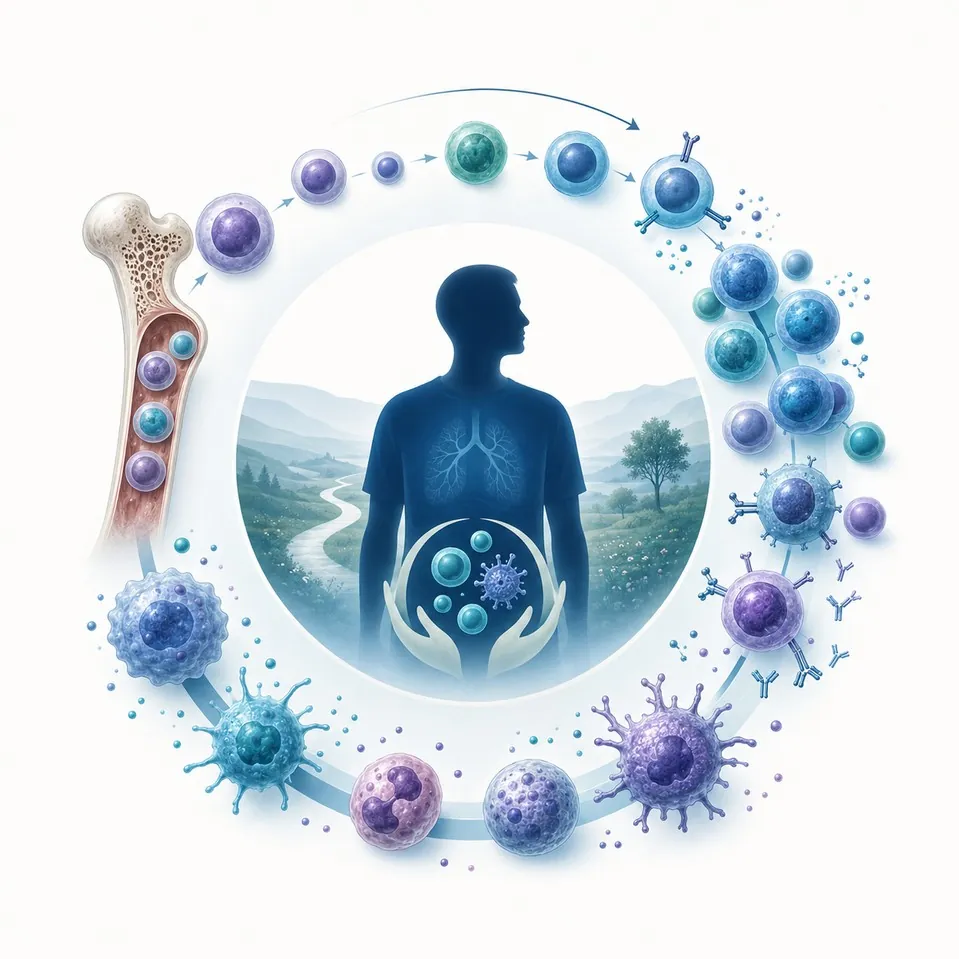
The Immunogenetics & Transplantation Immunology Research Team investigates the genetic, immunological and molecular factors that shape donor-recipient compatibility, transplantation outcomes and immune recovery.
Our research connects HLA diversity and population immunogenetics with donor selection, alloimmune responses and post-transplant monitoring. By integrating molecular, serological and cellular information with longitudinal clinical and biological samples, we investigate how compatibility, immune reactivity, engraftment and immune reconstitution influence transplantation outcomes.
A major focus is understanding how immunogenetic variation affects donor availability and donor-recipient matching, particularly within the Cypriot population. This work is complemented by research on HLA and non-HLA antibodies, chimerism, cell-free DNA, graft-versus-host disease and immune recovery after transplantation.
Why this research matters
Transplantation outcomes are shaped by events that begin before transplantation and continue long after the graft is established. Population-level HLA diversity affects the probability of finding a suitable donor; donor-recipient compatibility influences alloimmune risk; and post-transplant molecular and cellular dynamics determine engraftment, immune recovery and complications. Studying these processes as a connected biological continuum can provide a more complete understanding of transplantation than any single measurement in isolation.
How we do Science
Connecting population immunogenetics with longitudinal transplantation biology.
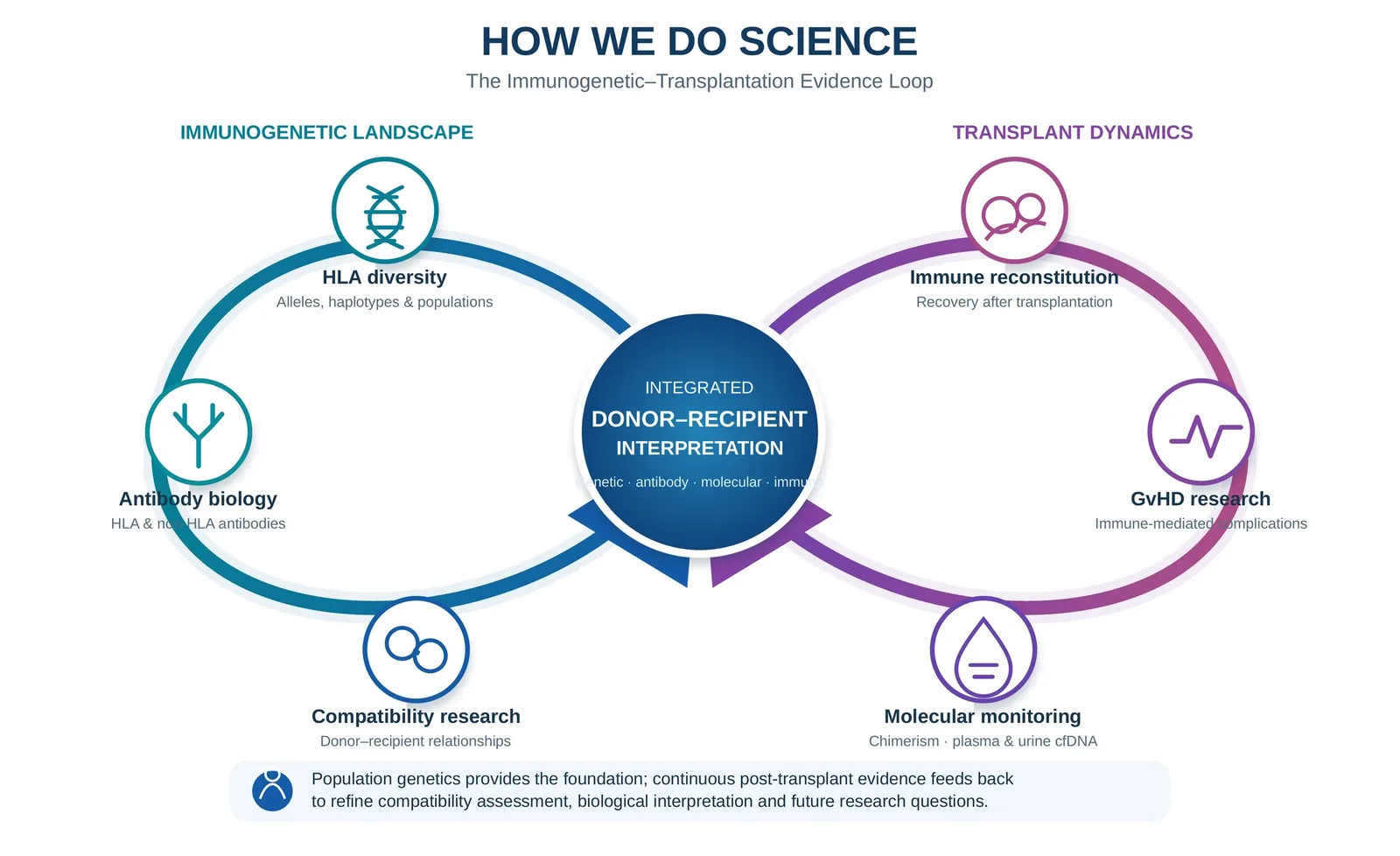
Our research combines immunogenetic analysis, HLA diversity and population data, antibody and compatibility studies, molecular monitoring, cellular immune profiling, longitudinal biological samples and relevant clinical information. Rather than studying these parameters independently, we aim to understand how they interact across the transplantation journey.
Our work extends from population-level immunogenetic diversity and donor availability, through donor-recipient compatibility and alloimmune risk, to post-transplant engraftment, immune reconstitution and complications.
Research Focus Areas
Research Methods & Technologies
The team combines immunogenetic, serological, cellular and molecular expertise with longitudinal transplantation samples, donor-registry data and relevant clinical information.
- 01
HLA typing by Sanger sequencing and next-generation sequencing for high-resolution immunogenetic analysis, HLA-diversity research and donor-recipient matching studies.
- 02
HLA and non-HLA antibody characterisation for investigation of sensitisation, donor-specific immune responses and alloimmune risk.
- 03
Virtual and functional compatibility assessment integrating molecular, serological and cellular evidence, including flow-cytometric crossmatch approaches.
- 04
Conventional and NGS-based chimerism analysis for longitudinal investigation of engraftment and donor-recipient haematopoietic dynamics.
- 05
Cell-free DNA analysis in plasma and urine for minimally invasive research into chimerism, graft injury and post-transplant change.
- 06
Flow-cytometric immune profiling supporting investigation of immune reconstitution and post-transplant immune-cell populations.
- 07
Population immunogenetics and donor-registry datasets supporting research into HLA diversity, donor availability and matching probabilities.
- 08
Longitudinal transplantation cohorts and samples enabling integrated GvHD, immune-reconstitution and transplantation-outcome studies.
Research across KRI
Transplantation research frequently intersects with other scientific programmes across KRI. Natural interfaces include:
Cellular & Molecular Immunology
Immune-cell biology, T-cell function, cellular immune profiling and post-transplant immune reconstitution.
Advanced Diagnostics & Genomics
Molecular monitoring, cfDNA, genomic analysis and population-genetic questions relevant to transplantation.
Cellular & Molecular Pathology
Haematological malignancy biology, disease recurrence and cellular or molecular investigation of post-transplant disease dynamics.
Life at the team
Research within the Immunogenetics & Transplantation Immunology team brings together laboratory investigation, clinical and translational research, data analysis and collaboration with transplantation professionals and research partners in Cyprus and internationally. Active engagement through collaborative projects, scientific meetings, international conferences, specialised training and professional networks supports continuous scientific development.
Collaborate with us
We welcome collaboration with researchers, transplant programmes, hospitals, donor registries, universities and research consortia interested in immunogenetics, transplantation immunology and longitudinal transplantation research.
Explore partnershipsJoin the team
We welcome enquiries from students, doctoral and postdoctoral researchers, clinicians and scientists interested in immunogenetics, transplantation immunology and translational research.