T-03 · Research team
Cellular & Molecular Pathology Team
Connecting cellular phenotype, tissue context and molecular mechanisms.
Purpose
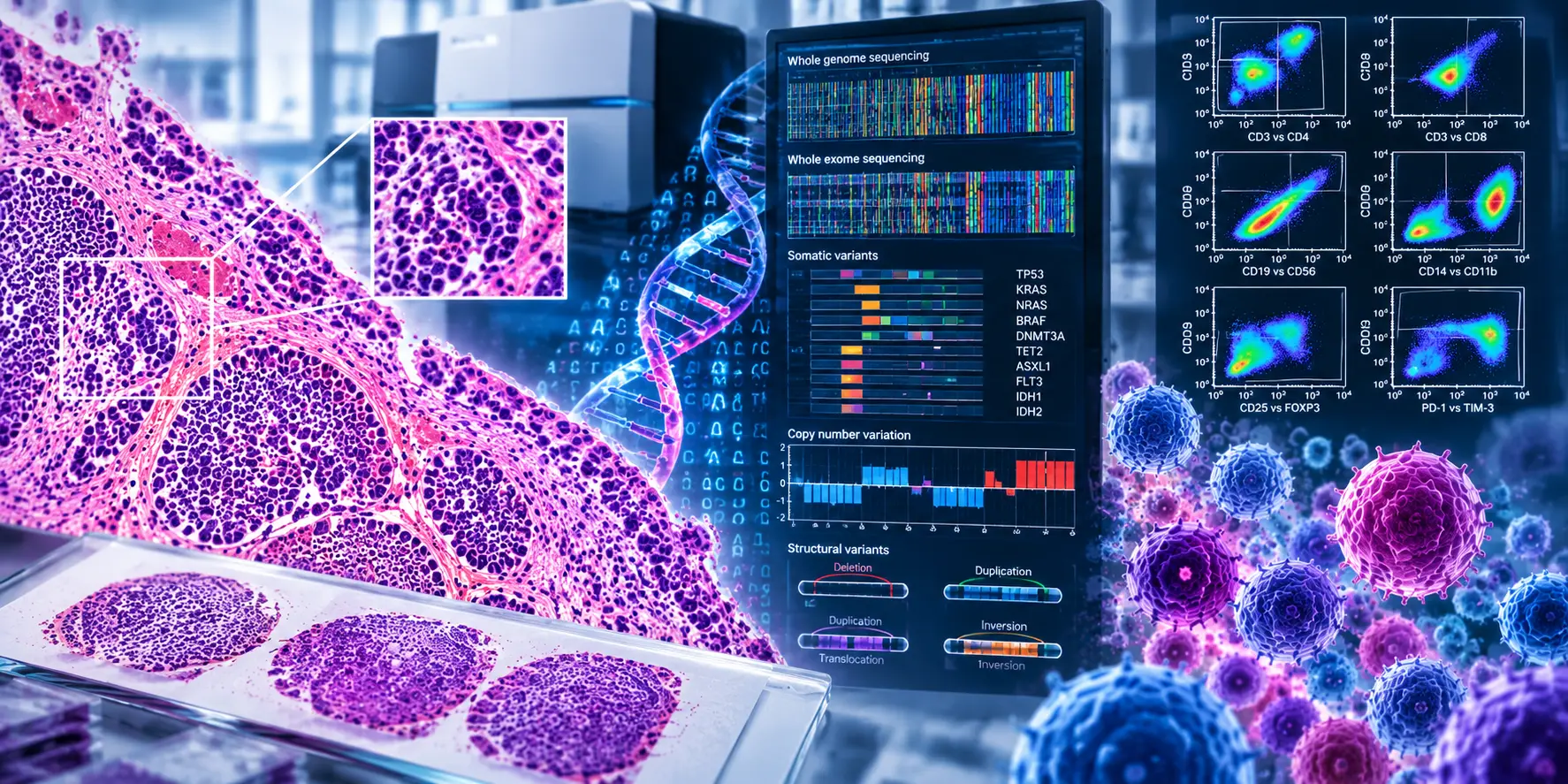
The Cellular & Molecular Pathology Research Team investigates how cellular phenotype, molecular and genomic alterations, and clonal heterogeneity shape the development and evolution of cancer.
By integrating cellular, molecular, genomic and cytogenetic information with patient-derived material, longitudinal samples and experimental models, we aim to understand the biological mechanisms underlying disease initiation, progression, clonal selection and relapse, including the evolution of malignant populations under therapeutic pressure.
Why this research matters
Cancer is not a static disease. Malignant populations can be heterogeneous, change over time and respond differently to biological or therapeutic pressures. Understanding how cellular phenotype, molecular alterations and clonal architecture interact is central to explaining disease progression, treatment resistance and relapse. The team connects observations in patient-derived material with functional and experimental models to investigate which alterations are biologically meaningful and how they contribute to disease behaviour.
How we do Science
From cells and tissues to mechanisms, clonal dynamics and experimental models.
Our research starts with clinically relevant material—including fresh tumour, FFPE tissue, peripheral blood and bone marrow—and combines cellular phenotyping with molecular, genomic and cytogenetic analysis. Longitudinal and, where available, pre-diagnostic samples allow us to investigate how malignant and pre-malignant populations emerge and evolve over time.
Findings generated from patient-derived material can then be explored through primary or established cell-culture systems, functional genomic approaches and in vivo or patient-derived xenograft-associated models. This creates a research continuum from observation to mechanism and from molecular association to functional validation.
Research Focus Areas
Research Methods & Technologies
The team integrates complementary cellular, molecular and experimental approaches. Detailed instruments and shared infrastructure are presented through KRI Research Facilities.
- 01
Flow-cytometric approaches for cellular phenotyping and investigation of malignant cell populations.
- 02
Cell isolation and enrichment using bead-based separation and flow-cytometric sorting for downstream molecular and functional studies.
- 03
Molecular and genomic approaches for the study of cancer-associated alterations.
- 04
Cytogenetic approaches for the investigation of chromosomal and genomic abnormalities.
- 05
Primary and established cell-culture models for functional and mechanistic studies.
- 06
CRISPR-based functional genomic approaches for gene and pathway interrogation.
- 07
Antigen-receptor repertoire and molecular clonality analysis for studying clonal architecture and evolution.
- 08
Longitudinal and pre-diagnostic sample resources for investigating temporal molecular changes and clonal evolution.
Research across KRI
The team provides a natural bridge between patient-derived material, molecular interpretation and experimental validation. Key interfaces across KRI include:
Advanced Diagnostics & Genomics
Genomic and molecular profiling, clonal evolution, structural variation and longitudinal molecular research.
Cellular & Molecular Immunology
Tumour-immune interactions, immune-cell phenotyping, tumour microenvironment questions and functional studies linking cancer biology with immune behaviour.
Immunogenetics & Transplantation Immunology
Haematological malignancy biology, relapse-related questions and cellular or molecular investigations that intersect with transplantation follow-up.
Life at the team
The team fosters a collaborative research environment where cellular, molecular and experimental perspectives come together to address questions in cancer biology. Scientific exchange, interdisciplinary collaboration and continuous professional development are encouraged through research meetings, conferences, workshops, specialised training and engagement with the wider scientific community.
Collaborate with us
We welcome collaborations that require integrated investigation of tumour or haematological disease biology, clonal evolution, cellular and molecular phenotyping, biomarker discovery, functional genomics or experimental cancer models.
Explore partnershipsJoin the team
Students, doctoral and postdoctoral researchers, technical scientists and visiting researchers interested in cancer biology, cellular pathology, molecular mechanisms and experimental research are invited to explore central KRI opportunities.