T-02 · Research team
Advanced Diagnostics & Genomics Team
Decoding genomic variation to understand disease, advance molecular diagnostics and enable precision medicine.
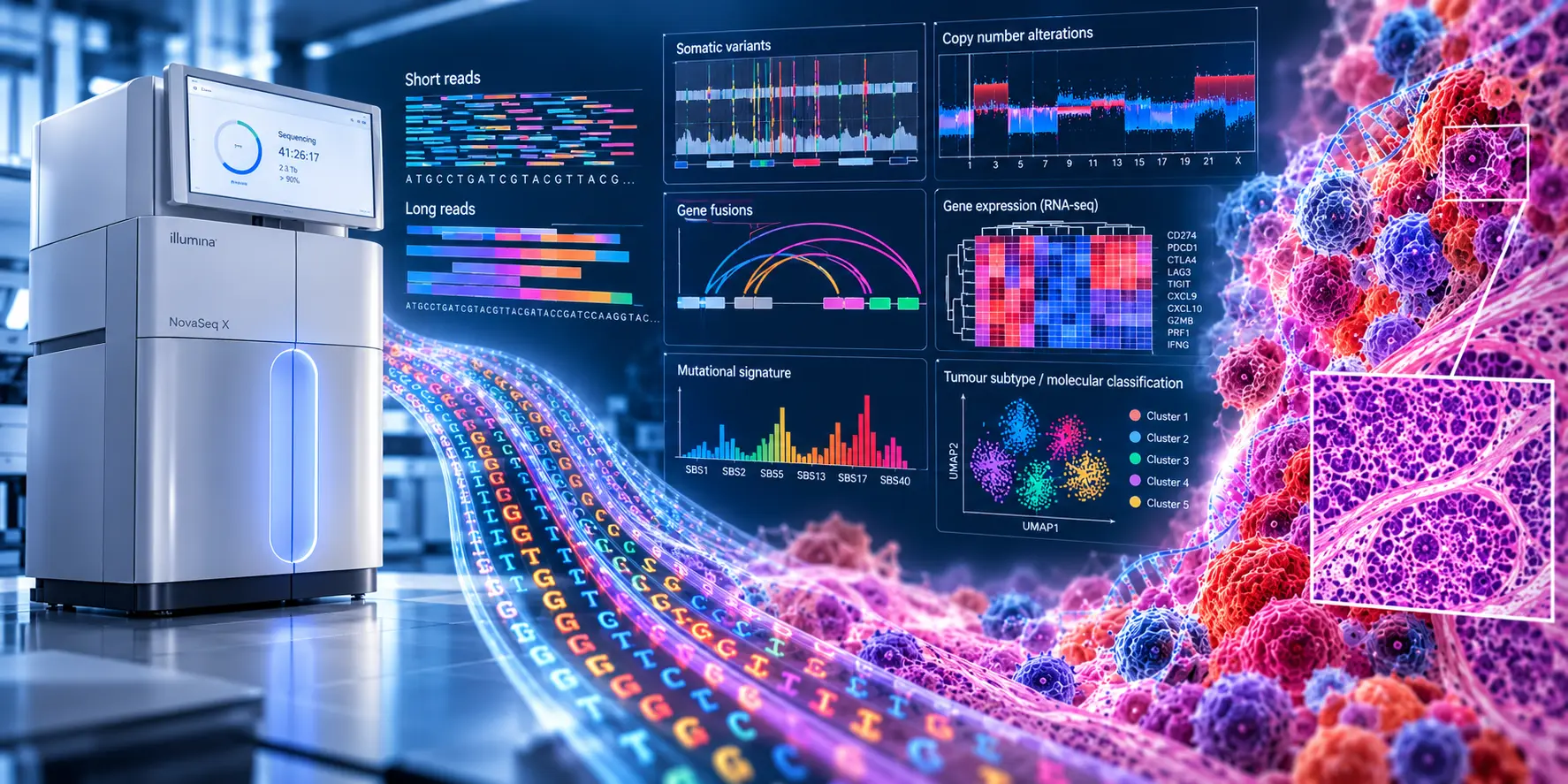
Purpose
The Advanced Diagnostics & Genomics Research Team investigates the genomic and molecular basis of cancer, inherited disorders and human genetic variation, connecting discovery-oriented genomics with translational and diagnostic research.
We combine targeted and broad genomic approaches, molecular profiling, transcriptomic analysis and structural-genomic methods to characterise disease-associated alterations across haematological malignancies, solid tumours, hereditary cancer and rare genetic disorders. By integrating molecular information with clinically relevant and longitudinal samples, we investigate disease heterogeneity, molecular evolution, treatment response and measurable residual disease.
Our research also extends to population genomics. Through the Cyprus Genome Project and related studies, we investigate genomic variation within the Cypriot population, generating knowledge that can strengthen variant interpretation and support more representative approaches to precision medicine.
Why this research matters
Genomic findings are most informative when they are interpreted in biological, clinical and population context. Cancer evolves over time, inherited disorders may be genetically heterogeneous, and variant interpretation can be influenced by population-specific frequencies. By combining molecular discovery with longitudinal and population-aware research, the team seeks to improve understanding of disease mechanisms and develop more precise ways to characterise and monitor disease.
How we do Science
From molecular discovery to longitudinal tracking.
Our research integrates sequencing, molecular profiling, transcriptomic, quantitative and structural-genomic approaches to investigate disease at complementary levels. Discovery-oriented analysis identifies and characterises genomic alterations; RNA-based approaches provide insight into gene activity, molecular pathways and fusion events; targeted and custom approaches allow disease-associated findings to be investigated in greater depth; and longitudinal strategies enable molecular change to be followed across time.
Together, these approaches create a continuous framework connecting genomic discovery, molecular characterisation, clinical interpretation and longitudinal monitoring. Shared Institute facilities provide the underlying sequencing, molecular and analytical infrastructure, while the team contributes the scientific questions, study design and interpretation.
Research Focus Areas
Research Methods & Technologies
The team combines complementary genomic and molecular approaches that directly support its research programmes.
- 01
Next-generation sequencing for targeted genomic analysis and whole-exome sequencing.
- 02
DNA- and RNA-based molecular analysis, including fusion and gene-expression studies.
- 03
Cell-free DNA approaches for liquid-biopsy and longitudinal research.
- 04
Quantitative PCR approaches supporting sensitive molecular measurement and MRD research.
- 05
Sanger sequencing for targeted validation and focused genomic investigation.
- 06
Cytogenetic and structural-genomic approaches, including FISH, microarray analysis and optical genome mapping.
- 07
NGS data analysis, variant interpretation and integration of genomic and molecular findings across research applications.
Research across KRI
The team is intentionally connected to complementary KRI research programmes. Natural interfaces include:
Cellular & Molecular Pathology
Clonal evolution, tumour heterogeneity, molecular pathology, biomarker discovery and the integration of genomic findings with cellular or tissue context.
Cellular & Molecular Immunology
Molecular investigation of tumour-immune biology, immune-related biomarkers and research questions requiring integration of genomic and immunological information.
Immunogenetics & Transplantation Immunology
Population genetics, molecular monitoring, chimerism-related research and questions where genomic approaches intersect with transplantation biology.
Life at the team
Research in the team brings together experimental work, genomic analysis, scientific discussion and translational collaboration. Team members maintain active scientific development through conferences, specialised training, workshops and international scientific engagement.
Collaborate with us
We welcome research partnerships involving cancer genomics, molecular monitoring, inherited and rare disease genomics, population genetics and translational molecular research.
Explore partnershipsJoin the team
Current doctoral, postdoctoral, technical, fellowship and visiting-researcher opportunities are advertised through the central KRI Opportunities page.